Big Walk vs Peak: Handcrafted Campaign or Repeatable Chaos
By DayOneFix Editorial · August 6, 2026
Both are co-op phenomenons, both get filed under “friendslop,” and both live or die on voice chat. But Big Walk and Peak are close to opposite designs, and which one your group should buy depends on what you actually want from a game night.
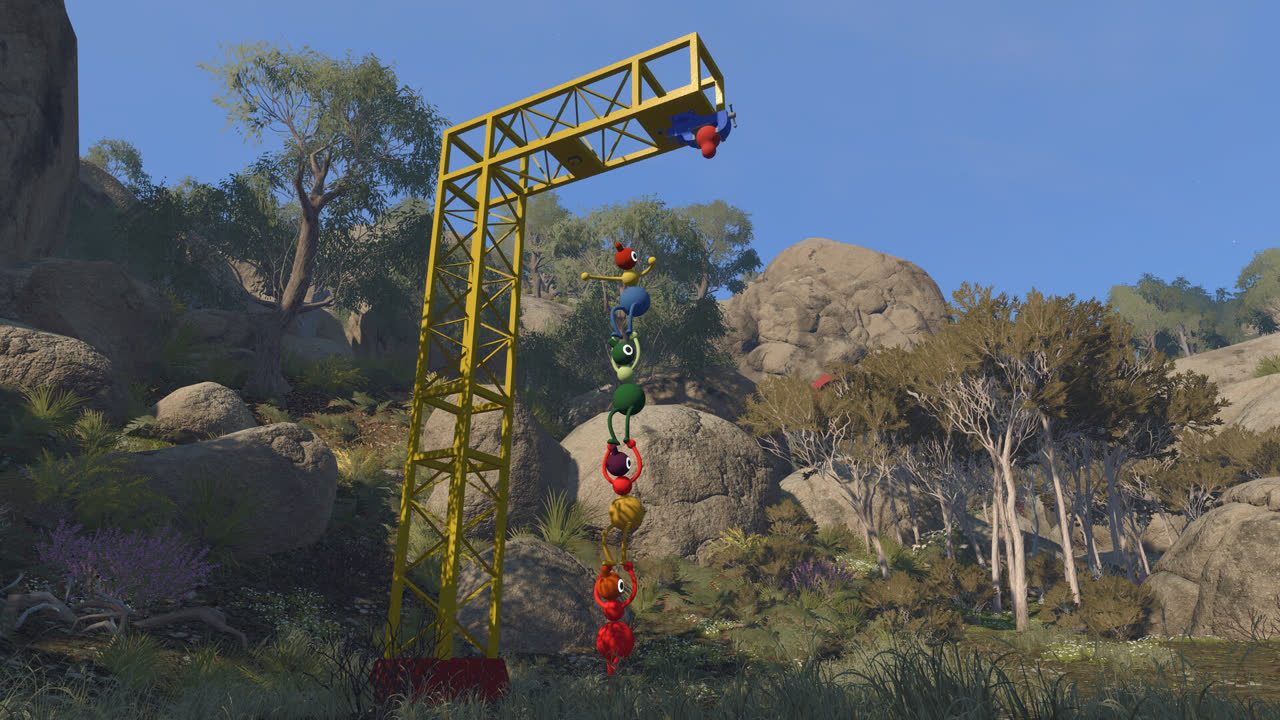
The core difference in one line
Peak is a run; Big Walk is a campaign. Peak’s mountains reset and every climb is a fresh gamble. Big Walk’s island is handcrafted, not randomly generated — a group project you begin, progress through, and finish.
Head to head
| Big Walk | Peak | |
|---|---|---|
| Structure | Handcrafted island, authored campaign | Procedural mountains, repeatable runs |
| The fun comes from | Engineered communication puzzles | Emergent chaos and near-death saves |
| Failure | No fail state — puzzles wait for you | One bad climb can end the run |
| Players | 2–12, crossplay | Small-squad climbing |
| Replay value | One great campaign; replays change with the group | Effectively endless |
| Session shape | Scheduled sessions toward a finish (~8h campaign) | Drop-in one-more-run energy |
| Solo | No solo mode at all | Playable with randoms |
PC Gamer’s framing stuck with us: if Peak is a prime example of friendslop “in the best possible way,” Big Walk is more like “friend-haute-couture” — the fun isn’t unscripted chaos, it’s a meticulously designed world with properly engineered puzzles. One reviewer’s analogy: Peak is Jenga — fun, repeatable, always the same shape — while Big Walk is something you build together once, properly.
Is Big Walk replayable like Peak?
No. Big Walk’s island and puzzles are handcrafted, so a replay covers the same ground — what changes is the group, and a different set of people turns the same campaign into a different experience. Peak’s procedural mountains reset every climb, which is what makes it effectively endless from one purchase.
Can you play either game solo?
Big Walk has no solo mode at all — it lives or dies on group voice chat. Peak is playable with randoms, so it’s the option when nobody in your group is online.
Does Big Walk have a fail state?
No — puzzles wait for you, so one mistake never ends the session. Peak is the opposite: one bad climb can end the run, which is exactly the chaos some groups are there for. If your group would rather solve than survive, that difference alone settles the choice.
Which should your group pick?
Pick Big Walk if:
- Your group can commit to the same 4–6 people across a few sessions (the host carries the save — how sessions work)
- You’d rather solve than survive; nobody’s in the mood for run-ending falls
- You have mixed hardware — crossplay spans PC, Mac, PS5, and Switch 2
Pick Peak if:
- Your group is drop-in/drop-out and scheduling two sessions is fantasy
- The fun you’re chasing is screaming during disasters, not decoding radio signals
- You want infinite replay from one purchase
Honest answer for a lot of groups: both, for different nights. They scratch different itches — Peak for chaotic one-offs, Big Walk for the ~8-hour campaign you’ll actually finish and talk about afterward.
FAQ
Is Big Walk or Peak better for a game night? They’re close to opposite designs, so it depends on the group. Peak is a run — procedural mountains, drop-in energy, effectively endless replay. Big Walk is a campaign — a handcrafted island your group starts, progresses through, and finishes over scheduled sessions.
Should a group just buy both? Honestly, a lot of groups should: they scratch different itches — Peak for chaotic one-offs, Big Walk for the roughly 8-hour campaign you’ll actually finish and talk about afterward.
Related
- How long Big Walk takes to beat
- How many players, and what group size actually plays best
- Crossplay: PC, Mac, PS5 and Switch 2
- Find players for Big Walk (LFG)
- Big Walk guide hub
More Big Walk answers — audio fixes, connection issues, group sizing — at the Big Walk guide hub.
Sources
The “handcrafted, not randomly generated” island, the “friend-haute-couture” phrase and the Jenga analogy come from PC Gamer’s Big Walk review. The Big Walk side of the table — 2–12 players, no solo mode, no fail states, crossplay across PC, Mac, PS5 and Switch 2, a roughly 8-hour main path — is collated from our own player count, crossplay and length pages, where the primary sources (the official FAQ, launch-week playtime reports) are listed. The Peak side — procedurally generated mountains, random matchmaking, one slip potentially ending a run — is widely known public gameplay and we cite no single document for it. The right-hand comparisons and the closing “which one should you pick” call are editorial judgement, not either developer’s claim.